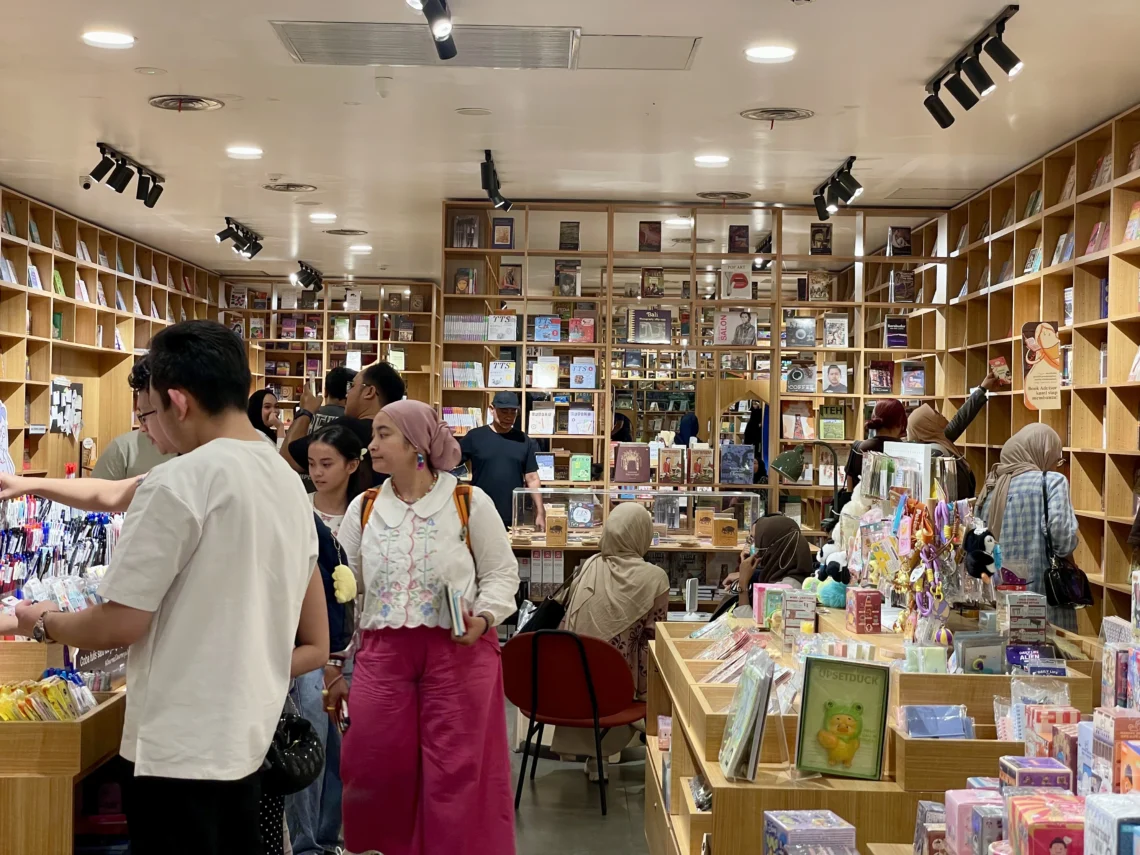
How Gramedia Jalma Reimagines the Bookstore Experience Through Space
At the end of 2025, a friend invited me to attend a writer talk show at Gramedia Jalma, one of the newest bookstores in South Jakarta, Indonesia, which has recently become a favorite go-to destination for book lovers.
Gramedia Jalma is a sub-brand of Gramedia, one of Indonesia’s most well-known bookstore chains. With its new concept, the store offers more than just a place to buy books. Visitors can browse, read, attend discussions, and spend time in a space designed around the experience of literature. It feels like a refreshing take on the modern bookstore, particularly for younger generations who value experiences as much as products.
Before entering the store, the exterior looked fairly familiar. A transparent glass façade revealed parts of the interior, while best-selling books were displayed near the entrance. Above the doorway, the store’s signage marked a compact entrance accompanied by both stairs and a ramp, providing accessible entry for visitors with disabilities. Personally, I had never seen a bookstore that encouraged visitors curiosity by its exterior appearance. And from the outside, the interior also appeared to present books in a more inviting and less intimidating way.
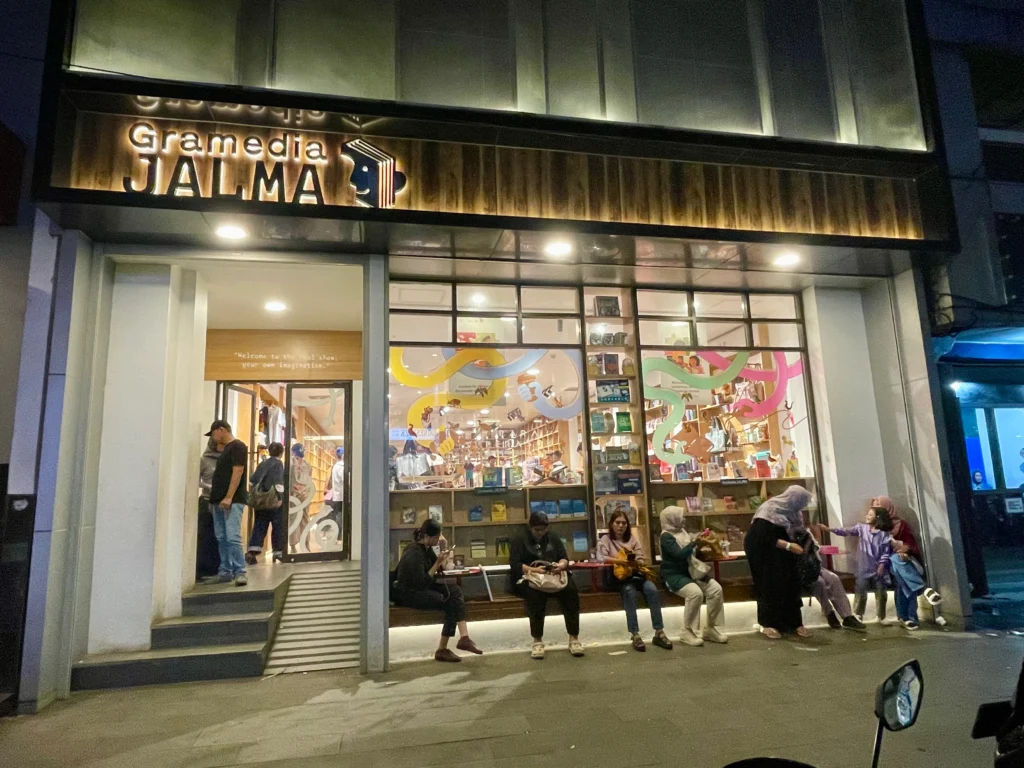
As soon as I stepped inside, my perception of what a bookstore could be began to change. Instead of feeling rigid and monotonous, the space felt interactive, welcoming, and designed to encourage exploration.
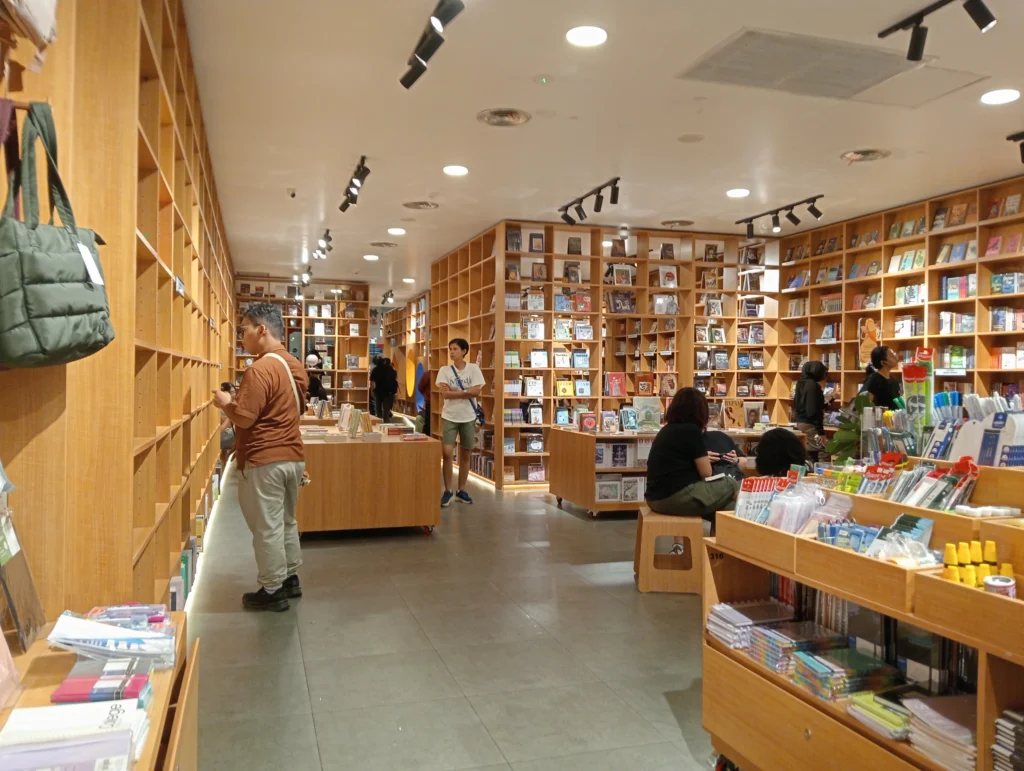
Spatial Transformation of the Store
The Shelves as the Key to the Transformation
Unlike the conventional Gramedia stores I had visited before, Gramedia Jalma offers a noticeably different experience. The first thing that stood out was the overall atmosphere. The combination of bright tones and earthy colors softens the interior, creating a warm environment that feels approachable rather than formal.
The shelves play a major role in shaping this impression. Finished in light wood, they create a softer and more grounded atmosphere throughout the bookstore. Rather than presenting books in a rigid or overly academic setting, the shelving design makes literature feel more accessible and inviting. The arrangement of the shelves also encourages exploration. Instead of long, repetitive aisles, the layout creates moments of discovery that make browsing feel more engaging.
Lighting further enhances this experience. Integrated shelf lighting highlights selected collections and adds visual depth throughout the store. Rather than relying solely on signs, the lighting subtly guides visitors toward specific books and sections.
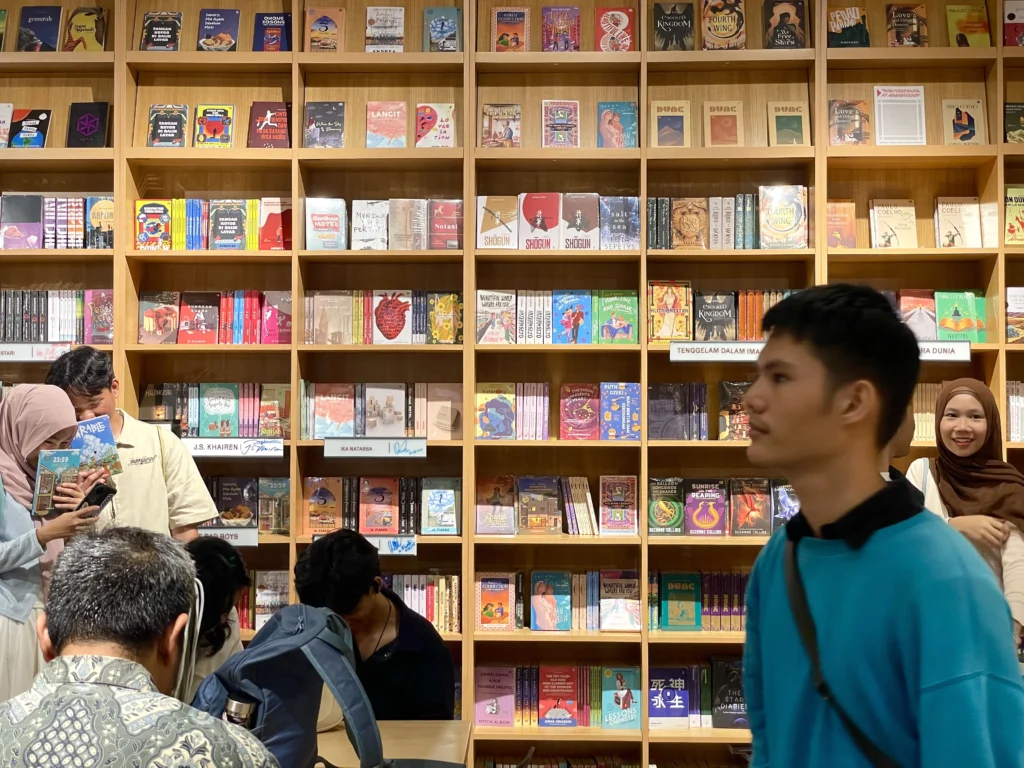
As a result, the shelves become more than storage units. They function as curated displays that encourage visitors to explore the bookstore at their own pace.
The Shelves as Spatial Partitions
Beyond displaying books, the shelves also act as spatial partitions that help define different zones within the bookstore. Several sections are organized according to genres, including history, science, and children’s literature.
Instead of creating enclosed rooms, the shelves establish boundaries while maintaining visual connections between spaces. This allows visitors to easily understand the organization of the bookstore. People can see what lies beyond a section before entering it, while those already inside remain visually connected to the rest of the space.
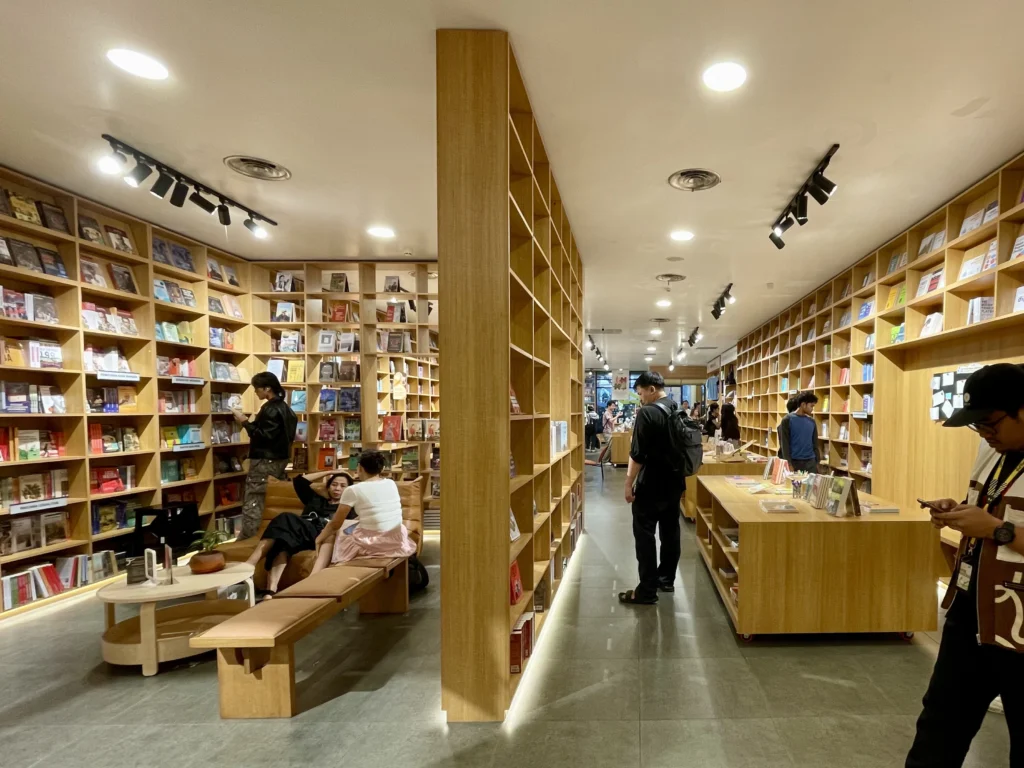
As a result, the bookstore feels open and less restrictive, encouraging visitors to move freely between different collections.
The Role of Seating Areas
One of the most distinctive features of Gramedia Jalma is the presence of seating areas throughout the bookstore. While seating may seem like a simple addition, it represents a significant departure from the conventional bookstore model, where visitors are often expected to browse briefly before making a purchase.
The seating areas encourage visitors to slow down, spend more time in the space, and engage with books beyond the act of buying them. Readers can browse a title, sit down, and continue reading without feeling rushed. This creates a more relaxed relationship between visitors and literature, transforming the bookstore into a place for experience rather than transaction.
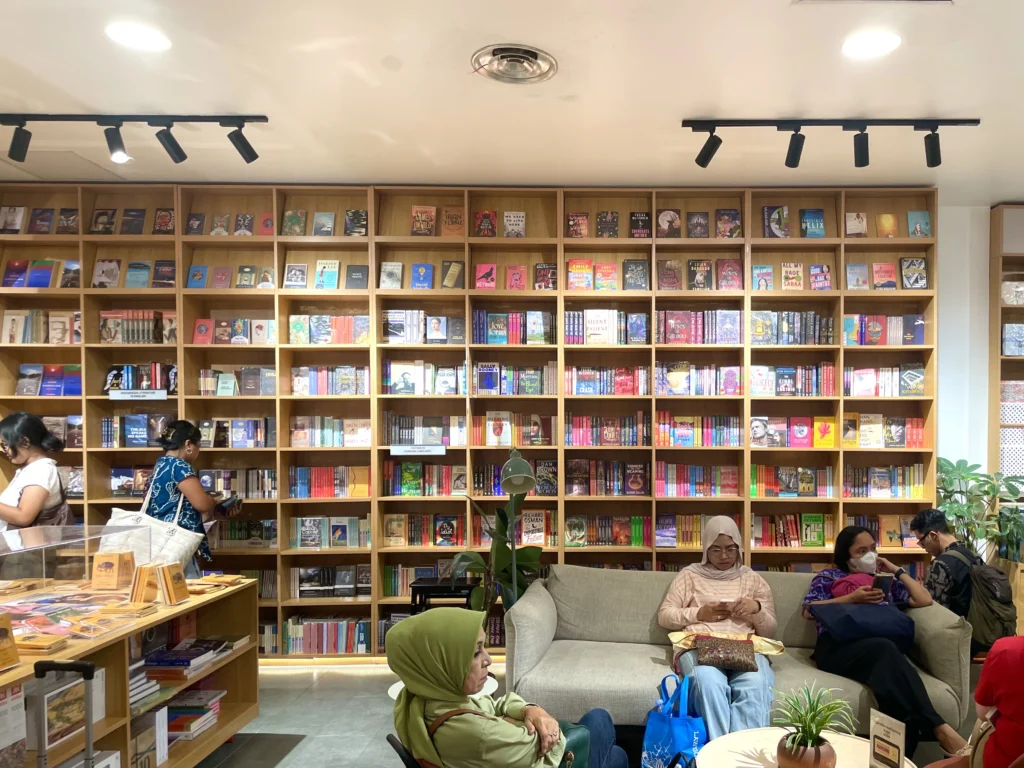
From a retail perspective, the seating areas also influence visitor behavior. By encouraging people to stay longer, they create more opportunities for exploration, discovery, and interaction with books.
Floor Elevation
Floor elevation also plays an important role in defining the bookstore’s spatial experience. The transition between levels is achieved through both stairs and ramps, creating a gradual journey through the space. These changes in elevation help distinguish different functions without relying on walls or enclosed rooms.
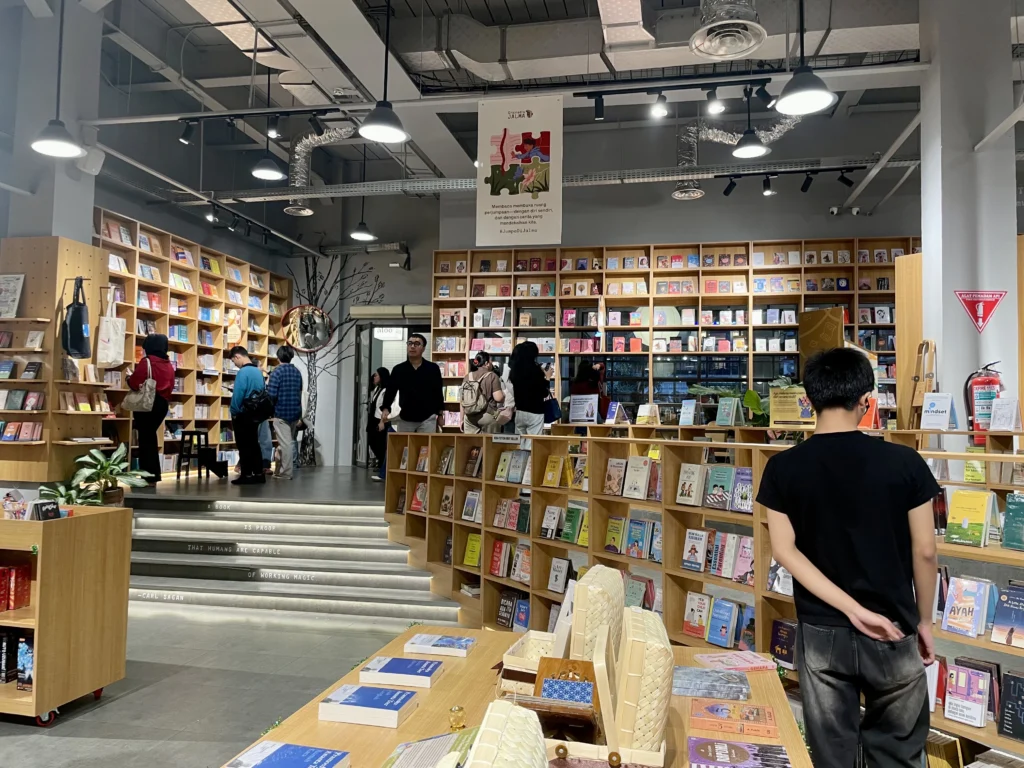
The highest level of the bookstore is dedicated to a communal workspace equipped with large tables. This area can accommodate coworking activities, workshops, book discussions, and book launches.
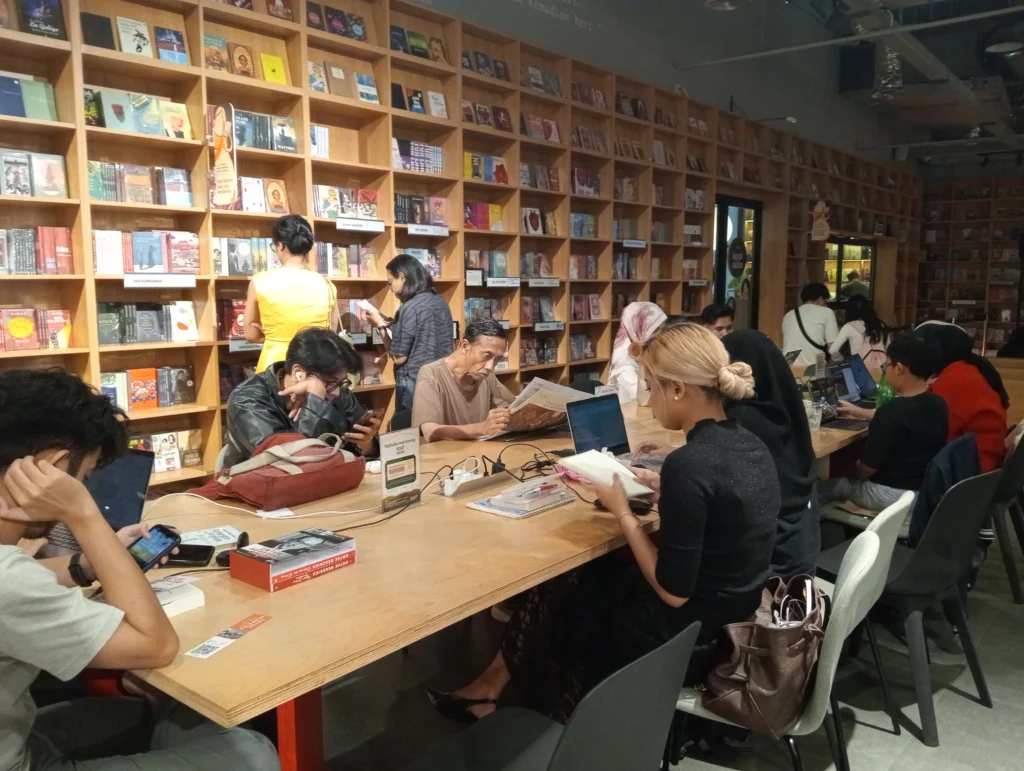
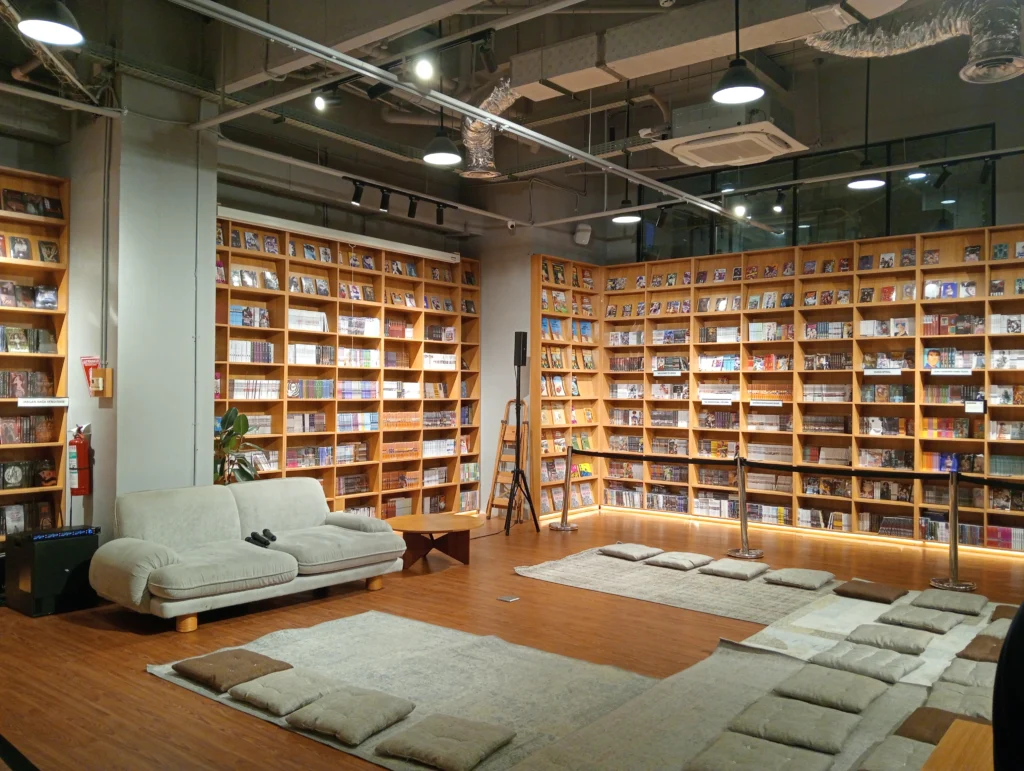
The change in elevation also creates a visually engaging interior. It is not uncommon to see visitors taking photos around the stairs and ramp, where the layered shelves and open sightlines create a distinctive composition.
In this way, the elevation contributes not only to circulation but also to the visual identity of the bookstore.
Inclusivity Through Design
Accessibility is integrated into the bookstore’s spatial design rather than treated as an afterthought. Visitors with mobility limitations can browse books while moving along the ramp, where shelves are positioned on both sides. The ramp functions not only as a circulation route, but also as an active part of the browsing experience.
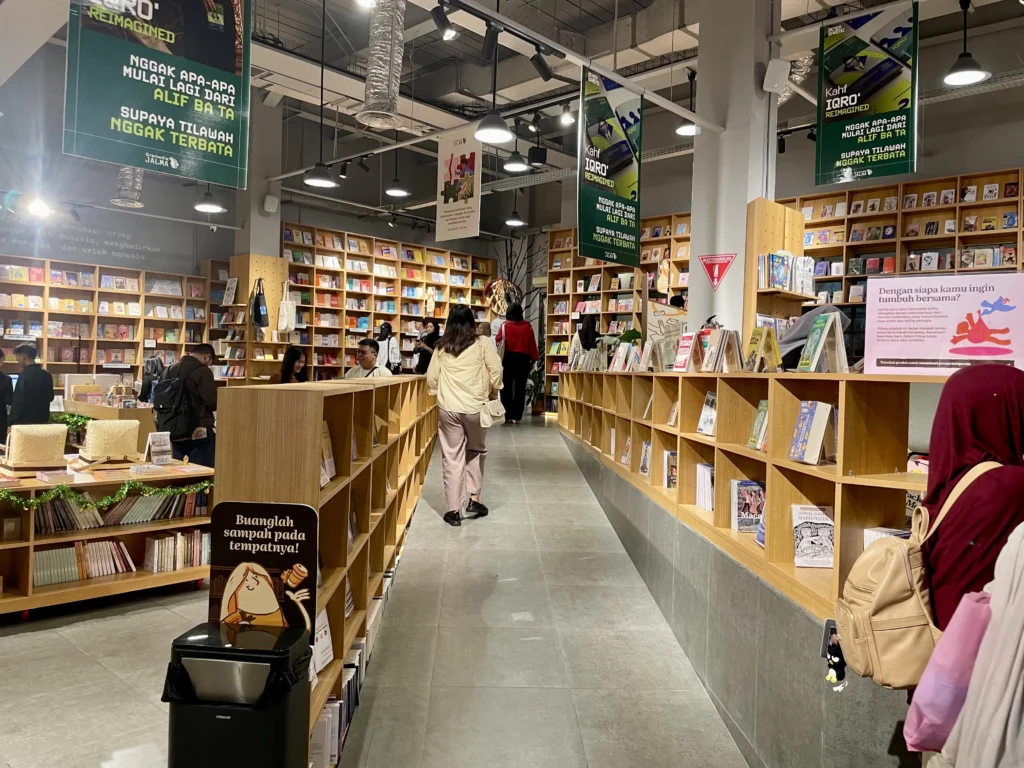
This design approach creates a more inclusive environment and allows a wider range of visitors to engage with literature comfortably. By incorporating accessibility into the overall layout, Gramedia Jalma demonstrates that inclusive design can be seamlessly integrated into everyday retail spaces.
What Today’s Retail Spaces Can Learn
Retail spaces today are no longer designed solely for transactions. Increasingly, they are expected to provide experiences that encourage visitors to stay, interact, and return.
Gramedia Jalma reflects this shift through its spatial approach. The layout encourages visitors to explore, pause, and spend time within the environment rather than simply purchase books and leave. This approach aligns closely with the preferences of younger generations, particularly Gen Z, who tend to value flexibility, atmosphere, and visual engagement alongside functionality.
Through open seating areas, communal spaces, accessible circulation, and carefully curated displays, Gramedia Jalma demonstrates how spatial design can support both visitor experience and brand identity. Rather than positioning itself as a conventional bookstore, it presents literature as part of a broader lifestyle experience – one where architecture, community, and reading intersect within the same space.


Anda Mungkin Suka Juga
Toko Merah: Sejarah Gedung VOC dan Keunikan Arsitekturnya di Kota Tua
Mau Kuliah Jurusan Arsitektur? Coba Pertimbangkan 8 Hal Ini
